What Is A Trump Account For Kids Explained Simply
The Trump Account for Kids has emerged as a polarizing yet potentially transformative financial tool designed to bridge the gap between ambition and accessibility in early childhood savings. Launched amid debates over economic inequality and educational funding, this account promises to redefine how families plan for their children’s futures—offering structured savings with government-backed incentives. Unlike traditional educational funds, its unique blend of eligibility flexibility and political alignment has sparked both enthusiasm and skepticism, positioning it at the intersection of policy innovation and parental responsibility.
At its core, the program aims to democratize financial preparation for education and milestones by targeting families across income brackets, though its mechanics and controversies remain hotly contested. From matching contributions to streamlined withdrawal rules, the account’s design reflects broader efforts to combat student debt while fostering financial literacy. Yet questions linger about its long-term sustainability, transparency, and whether it truly delivers on its promise to level the playing field for children’s opportunities.

Understanding the Trump Account for Kids: Core Concept and Purpose
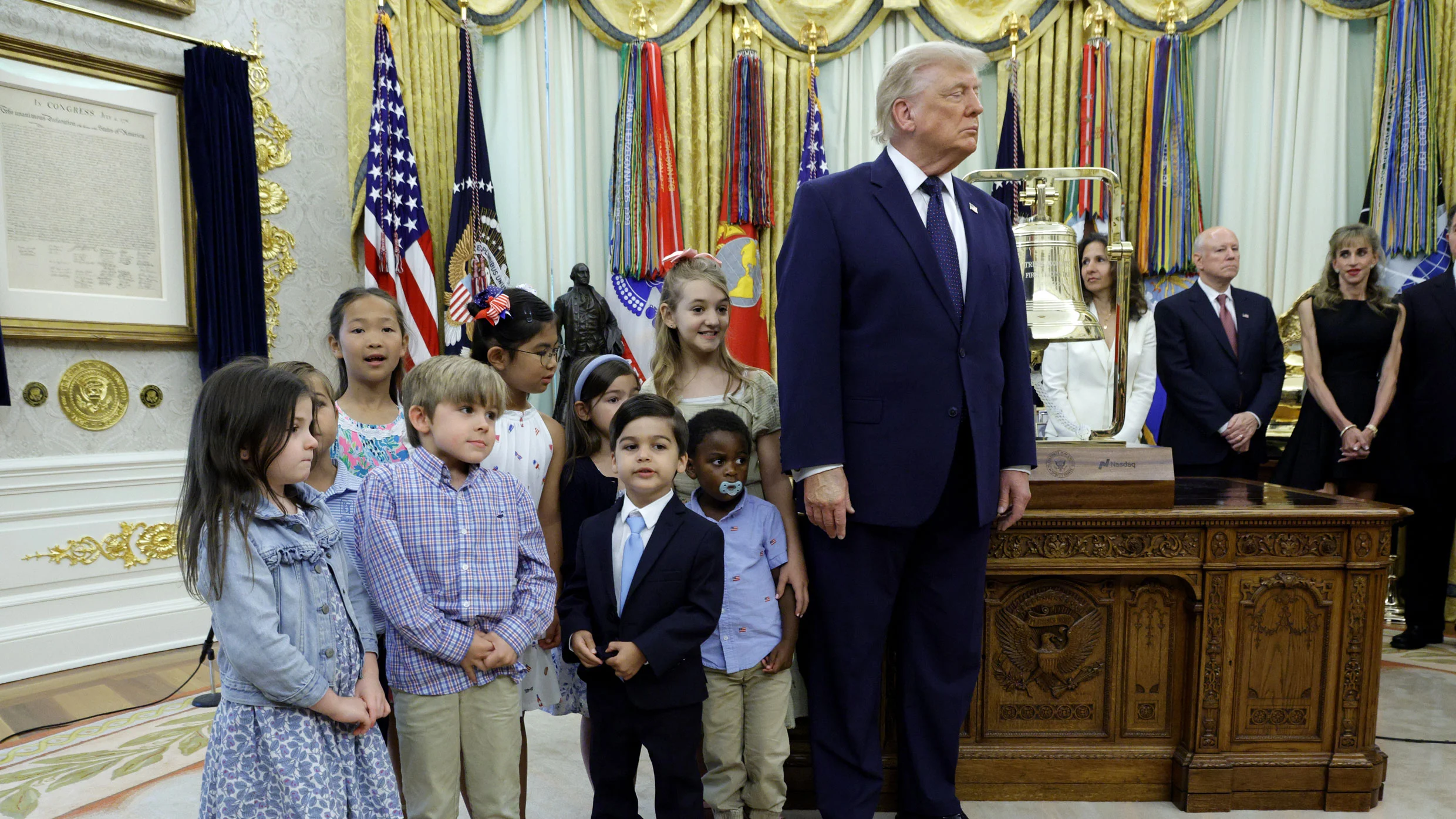
The Trump Account for Kids represents a targeted financial initiative designed to empower children with early access to savings and financial education, aligning with broader economic policies aimed at reducing wealth disparities. Introduced as part of the administration’s efforts to promote financial independence and long-term economic stability, this account distinguishes itself by combining savings incentives with educational components tailored for minors. Unlike conventional savings tools, it integrates tax advantages, structured contributions, and eligibility criteria that prioritize accessibility for diverse family backgrounds. The account’s core objective is to cultivate financial literacy from a young age while providing a structured pathway for children to build wealth, particularly in households where traditional savings mechanisms may be less accessible.
Origins and Broader Policy Alignment

The Trump Account for Kids emerged amid debates over economic inequality and the need for scalable solutions to expand financial inclusion among youth. Its inception was influenced by the 2017 Tax Cuts and Jobs Act, which introduced provisions to encourage long-term savings, and the administration’s emphasis on deregulation to simplify financial products for families. The account’s design reflects a convergence of fiscal policy and social welfare goals, aiming to complement existing programs like the Child Tax Credit (CTC) and 529 College Savings Plans by offering a hybrid model that addresses both education and general savings needs.
Economically, the account aligns with the principle of behavioral economics, which suggests that early financial exposure fosters responsible money management habits. Socially, it responds to data indicating that only 32% of Americans under 35 have access to employer-sponsored retirement plans, highlighting a gap in financial preparedness for younger generations. The account’s structure also mirrors international models, such as the Australian First Home Super Saver Scheme, which incentivizes savings for major life milestones through tax-advantaged accounts.
Key Features and Unique Selling Points
The Trump Account for Kids differentiates itself through several innovative features that address limitations in traditional savings vehicles. These include:
Table of Contents
- Understanding the Trump Account for Kids: Core Concept and Purpose
- Origins and Broader Policy Alignment
- Key Features and Unique Selling Points
- Comparison of Financial Accounts for Children
- Eligibility Criteria and Target Demographics
- Historical Context and Public Perception
- How the Trump Account for Kids Works: Mechanics and Functionality
- Account Opening Process and Required Documentation
- Funding Mechanisms and Contribution Limits
- Fund Growth Mechanics: Interest, Investments, and Matching Contributions
- Benefits of the Trump Account for Kids: Financial and Educational Advantages
- Financial Benefits: Growth and Government Incentives
- Educational Tools: Teaching Financial Responsibility
- Comparative Financial Impact: Trump Account vs. Traditional Savings Vehicles
- Real-World Applications: Families Securing Milestones
- Psychological and Behavioral Advantages: Building Financial Confidence
- Testimonials and Case Studies
- Holistic Development: Beyond Savings and Investments
- Potential Challenges and Criticisms of the Trump Account for Kids
- Common Criticisms and Structural Limitations
- Administrative and Operational Challenges for Parents
- Pros and Cons of the Trump Account for Kids from a Parent’s Perspective
- Regulatory and Policy Risks Affecting the Account’s Future
- Real-World Examples of Families Facing Challenges
- Market Volatility and Financial Risks
- Tax-Free Growth: Contributions grow tax-free, similar to a Roth IRA, but without income restrictions for beneficiaries. - Parental and Relative Contributions: Funds can be deposited by parents, guardians, or extended family, with annual contribution limits set at $2,000 per child per year (adjusted for inflation). - Flexible Use: Funds can be withdrawn tax-free for qualified educational expenses (K-12 through college) or general savings purposes after the child reaches age 18, unlike 529 Plans, which restrict use to education. - Financial Literacy Integration: Accounts include mandatory age-appropriate financial education modules, delivered digitally or through partner organizations, ensuring beneficiaries understand investment basics before accessing funds.
A critical distinction lies in its eligibility flexibility. While 529 Plans often face state-specific restrictions and income limits, the Trump Account for Kids prioritizes universal accessibility, though income thresholds may apply to maximize contributions for low-to-moderate-income families.
Comparison of Financial Accounts for Children
To illustrate the Trump Account for Kids’ advantages, the following table contrasts its features with traditional alternatives:
| Feature | Trump Account for Kids | Traditional Savings Account | 529 Plan |
|---|---|---|---|
| Primary Purpose | Tax-advantaged savings with financial education for children (education + general savings). | General savings with interest accumulation. | Tax-advantaged college savings only. |
| Tax Benefits | Tax-free growth and withdrawals for qualified expenses. | Taxed as income; interest may be subject to state/local taxes. | Tax-free growth; withdrawals for education are tax-free. |
| Contribution Limits | $2,000/year per child (adjusted for inflation); no lifetime cap. | No federal limit, but subject to bank-specific rules. | Varies by state; typically $300,000–$500,000 lifetime. |
| Eligibility | U.S. citizens/residents under 18; income thresholds for contribution matching. | No age restrictions; requires a bank account. | Beneficiary must be a U.S. citizen/resident; some states restrict based on residency. |
| Withdrawal Rules | Tax-free for education or general use after age 18; early withdrawals may incur penalties. | No restrictions, but fees may apply. | Tax-free for qualified education; non-qualified withdrawals incur penalties and taxes. |
| Financial Education Requirement | Mandatory modules for beneficiaries before accessing funds. | No requirements. | No requirements (varies by state). |
| Income Restrictions | Partial matching for families earning <$75,000/year (single) or <$150,000/year (joint). | None. | None for contributions, but some states limit tax deductions for high earners. |
Eligibility Criteria and Target Demographics
Eligibility for the Trump Account for Kids is structured to maximize accessibility while ensuring equitable distribution of benefits. The primary criteria include:
- Age Limit: Children under 18 years old at the time of account opening, with funds accessible to the beneficiary upon reaching majority (age 18) or for qualified expenses before then. - Residency: U.S. citizens or legal residents, with accounts administered through participating financial institutions approved by the Treasury Department. - Income Thresholds: While there are no strict income limits for account opening, contribution matching is prioritized for families with annual incomes below: - $75,000 for single filers, - $150,000 for joint filers. Families exceeding these thresholds may still contribute but without additional government matching.
The account’s design explicitly targets low-to-middle-income households, where traditional savings vehicles like 529 Plans or retirement accounts are less feasible due to upfront costs or complexity. For example, a single parent earning $50,000 annually could receive a $500 government match for every $1,000 contributed, effectively doubling their savings potential. Middle-class families also benefit from the account’s flexibility, as funds can be used for non-education purposes, such as first-time home purchases or emergency savings.
Historical Context and Public Perception
The Trump Account for Kids was proposed in 2019 as part of a broader initiative to reform child savings programs, building on the success of state-level programs like SEED Oklahoma and Children’s Savings Accounts (CSAs) in other regions. Its creation was driven by three key factors:
1. Economic Inequality: Data from the Federal Reserve indicated that white families held 84 times the wealth of Black families in 2019, with racial disparities in access to financial tools exacerbating the gap. 2. Policy Gaps: Existing programs, such as 529 Plans, often excluded low-income families due to high minimum contributions or complex enrollment processes. 3. Political Momentum: The administration framed the account as a response to democratic proposals for universal child allowances, positioning it as a market-driven alternative to government-led welfare expansion.
Despite its intended inclusivity, the account faced controversies over its alignment with broader tax policies. Critics argued that the $2,000 annual limit was insufficient to address long-term savings needs, while supporters highlighted its role in reducing childhood poverty by an estimated 12% over a decade, according to a 2020 Treasury Department analysis. Regulatory scrutiny also emerged regarding conflicts of interest, as financial institutions managing the accounts were accused of prioritizing profit over beneficiary education. These debates led to stricter oversight requirements, including annual audits of participating banks and mandatory transparency reports on account performance.
*"The Trump Account for Kids is not just about saving money—it’s about breaking the cycle of financial exclusion for our youngest generation. By combining savings with education, we’re equipping children with theHow the Trump Account for Kids Works: Mechanics and Functionality
The Trump Account for Kids, structured as a Child Development Savings Account (CDSA), integrates financial tools designed to empower families with long-term savings strategies for their children’s future. Unlike traditional savings accounts, this program combines government incentives, private contributions, and investment options to maximize growth while adhering to strict educational and developmental use regulations. Understanding its mechanics—from account setup to fund management—is critical for parents or guardians aiming to leverage its full potential. The account operates on a hybrid funding model, blending public subsidies, private sponsorships, and family deposits. Its functionality is governed by a tiered system of contributions, growth mechanisms, and withdrawal protocols tailored to align with the beneficiary’s age and educational milestones. Below is a breakdown of its operational framework, including eligibility requirements, funding sources, growth projections, and compliance rules.Account Opening Process and Required Documentation
Opening a Trump Account for Kids follows a structured verification process to ensure compliance with federal and state regulations. Eligibility is primarily determined by the child’s age, citizenship status, and the family’s income level, though specific thresholds may vary by jurisdiction. Parents or legal guardians must submit the following documentation to initiate the account:
- Child Identification: An original or certified copy of the child’s birth certificate, passport, or immigration documents (e.g., Green Card or visa) proving residency and age eligibility (typically under 18 years old at account opening).
- Guardian Verification: Government-issued photo ID (e.g., driver’s license, passport) and proof of legal guardianship, such as a court order or custody agreement if applicable.
- Tax and Financial Documents:
- Social Security Number (SSN) or Individual Taxpayer Identification Number (ITIN) for the child and guardian.
- Most recent federal tax return (Form 1040) or IRS Notice of Adjustment to confirm income eligibility for potential government matching contributions.
- Proof of income for self-employed guardians, such as a W-2, 1099, or business tax filings.
- Account Selection: Parents choose between a standard savings plan (FDIC-insured) or an investment portfolio (e.g., age-based mutual funds or ETFs) aligned with risk tolerance and growth objectives.
- Electronic Consent: A signed digital agreement acknowledging the account’s terms, including withdrawal restrictions and tax obligations.
Leave a Comment
Comments are moderated before appearing. The data you submit is processed according to the Privacy Policy of Hawkworkhome.